For teachers, homeschool educators, and librarians

Pennsylvania Classroom Guide

Use a scary story and its researched legend companion to help readers ask where folklore ends, documented history begins, and fiction transforms both.
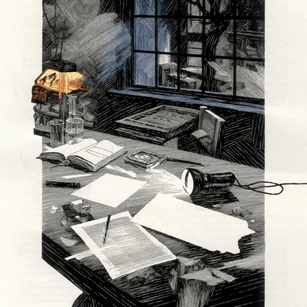
A classroom desk arranged with a notebook, evidence chart, flashlight, map, and source pages.

How to Use This Guide

Adaptable for grades 4–8

This is a flexible discussion and writing guide, not a universal age recommendation or standards claim. Before assigning material, review the selected story, its chapter notes in the parent guide, and the needs of your readers.

The activities can support one class period, a library program, or several homeschool sessions. Readers can use the complete free chapter, “The Apple Snitch,” without an email signup. The Pennsylvania urban legends overview connects all ten book subjects to researched companions.

Learning Goals

Readers will practice how to:

  • separate a documented event, a reported belief, an unresolved claim, and a fictional invention;
  • identify which source supports a statement and explain what that source cannot prove;
  • compare the mood and purpose of a legend article with a fictional adaptation;
  • discuss how setting, point of view, sensory detail, and uncertainty build suspense; and
  • write an original scene that labels invention honestly and treats real people and places with care.

Before Reading

  1. Preview the material. Read the selected story or excerpt, the matching legend companion, and the concrete content notes.
  2. Choose the evidence set. Select two to four short statements from the companion page and keep their linked sources available.
  3. Set a shared vocabulary. Explain that a tradition can be meaningful folklore without being proof that a supernatural event occurred.
  4. Protect real people. Remind readers that disability, tragedy, cultural tradition, and historical loss should not be reduced to monster imagery or a punch line.

Discussion Questions

  1. Which details on the companion page are supported by records, and which are presented as reports or folklore?
  2. What remains unknown? How does the page signal uncertainty instead of filling the gap?
  3. Which details did the fiction keep, change, or invent? What effect does each change have on the story?
  4. How does the Pennsylvania setting affect the conflict? Could the same scene happen anywhere without losing meaning?
  5. Where does suspense come from: danger, uncertainty, isolation, a copied voice, an object, or something else?
  6. How can a writer make folklore frightening while still treating a real person, community, or disaster responsibly?

Vocabulary

Primary source
Material created during the time being studied, such as a newspaper report, photograph, letter, map, or government record.
Secondary source
A later work that interprets or explains evidence, ideally showing where its information came from.
Folklore
Stories, beliefs, customs, and traditions shared within or about a community.
Legend
A traditional story connected to people, places, or events and told as though some part might be true.
Corroborate
To strengthen a claim with independent supporting evidence.
Adaptation
A new work that reshapes source material for a different purpose, audience, or form.

Folklore, History, or Fiction?

Give readers a set of statements drawn from the selected story and companion page. For each statement, ask them to place it in one of four evidence categories:

  1. Documented history: supported by an identifiable record or reliable source.
  2. Reported folklore: a source shows that people told or believed the story, not that the supernatural event occurred.
  3. Unresolved or disputed: evidence is incomplete, conflicting, or unable to answer the claim.
  4. Fictional adaptation: created or changed for the book’s story.

Readers should cite the page or linked source that guided each choice, then rewrite one overconfident statement so its certainty matches the evidence.

Writing Prompt

Choose a familiar local place and one piece of documented history or clearly labeled folklore. Write a 400–700 word suspense scene in which a character notices that one ordinary detail is wrong.

After the scene, add a short author’s note with two headings: What I researched and What I invented. Name the source used, identify the fictional changes, and explain one choice made to treat the place or people responsibly.

Educator Notes

Use suggested responses, not one rigid answer key

A strong response names the category, points to evidence, and uses cautious language when a source cannot prove more. Readers may classify a statement differently when they can justify the choice with a reliable source.

  • Look for calibrated language: “records show,” “a witness reported,” “later versions say,” “the evidence does not establish,” and “the story invents.”
  • Challenge source-free certainty: ask where a detail came from, when it first appeared, and whether later retellings copied one another.
  • Keep fiction visible: imaginative writing is welcome when readers label invention instead of presenting it as history.
  • Offer alternatives: readers who prefer not to write horror can create a mystery, historical scene, comic script, or source-comparison poster using the same evidence rules.