For parents, caregivers, teachers, and librarians

Pennsylvania Parent Guide

This guide reviews the complete print manuscript of Hometown Horror Stories: Pennsylvania. It describes what appears on the page so adults can make an informed choice for an individual reader without relying on a marketing age band alone.

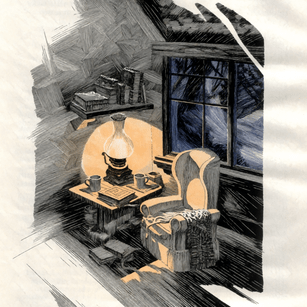
Two reading chairs, a closed book, mugs, and a warm lamp beside a rain-darkened window.

How to Use This Guide

Ratings are editorial guidance, not a guarantee

Readers respond differently to grief, darkness, pursuit, body-horror imagery, and threats involving children. Pair the rating with the concrete notes below. This guide does not assign one universal reading age to the collection.

The book contains ten independent stories. Every protagonist survives, and humor, friendship, family support, or problem-solving balances the danger. Most violence is threatened or fantastical rather than graphic, but several chapters sustain tension and end with a final unsettling image.

Collection Overview

Suspense
Sustained supernatural suspense appears throughout: stalking figures, copied voices, confined spaces, isolated roads and forests, underground settings, and threats that return in closing scenes.
Threats
Child protagonists are pursued, lured, impersonated, temporarily trapped, or placed near unsafe roads, abandoned mine features, a ravine, a collapsing culvert, and an underground mine fire.
Violence
Violence is generally non-graphic. The manuscript includes thrown objects, falls and scrapes, grabbing, a jacket tightening around a child’s throat, broken glass and doors, a near vehicle strike, and collapsing structures. No graphic wounds are described.
Death
No child protagonist dies on the page. The stories reference a historical murder, Civil War dead and a moved body, deceased grandparents, Raymond Robinson’s death, a mine collapse, and a miner who was never recovered.
Language
No profanity was found in the reviewed manuscript. “Stupid” appears twice in non-abusive dialogue or narration. Teasing and bullying language appears in the first story.
Sensitive topics
Bullying and online attention, grief, parental separation, an absent parent, memory loss, disability and dehumanization, war dead, industrial disasters, child endangerment, unsafe exploration, and supernatural voices imitating deceased or absent relatives.
Chapter-by-Chapter Notes

The five-point scale runs from 1, Campfire Creepy, to 5, Hall Light On. This collection’s chapters fall between 3 and 4 after manuscript review.

Chapter 1 · Stewartstown

The Book That Doesn’t Forget

Scare rating: 4 of 5 · Flashlight Required

Content notes: Bullying and social-media humiliation; a boy is erased from family memory and trapped in a supernatural book; a friend’s hand briefly disappears; a faceless shadow approaches a frightened child; references to the 1928 historical murder of Nelson Rehmeyer. No graphic injury.

Conversation: The chapter distinguishes Pennsylvania Dutch healing traditions from harmful magic and asks readers to separate a person from the trouble that person causes.

Chapter 2 · Koppel

Someone Is Walking Old Route 351

Scare rating: 4 of 5 · Flashlight Required

Content notes: A changing faceless figure stalks two teens through phones, cameras, a dark roadside, and eventually a bedroom; a passing car stalls near the entity; the creature imitates a deceased grandfather’s voice. The story discusses Raymond Robinson’s childhood electrical injury, visible disability, death, and mistreatment by curious strangers.

Conversation: Sensational online storytelling is contrasted with remembering the real person behind a frightening legend.

Chapter 3 · Gettysburg

The Soldier Who Wasn’t There

Scare rating: 4 of 5 · Flashlight Required

Content notes: Civil War dead are discussed and a historical corpse is described as having been moved for a photograph; musket fire and battlefield visions; a faceless soldier grabs a child’s jacket and tightens it at his throat while threatening to trap him inside a photograph. A grandparent experiences memory loss.

Conversation: Photographs can preserve history while also staging, simplifying, or replacing a person’s story.

Chapter 4 · Centralia

The Voices Under Ash Street

Scare rating: 4 of 5 · Flashlight Required

Content notes: An underground mine fire, dangerous gases, hot ground, and collapse risk; voices in pipes imitate an absent father and the children’s mother; faces appear in black water; a maintenance worker is found unconscious; children enter a utility room during an emergency. No death occurs on the page.

Conversation: The story repeatedly warns that Centralia’s real hazards are dangerous and should not be treated as an invitation to explore.

Chapter 5 · Cross Fork

Whatever You Do Don’t Follow the Crying

Scare rating: 4 of 5 · Flashlight Required

Content notes: Grief after a grandfather’s death; a creature copies trusted voices to lure children off a forest trail at night; pursuit in heavy rain; a rotten barrier breaks above a ravine; a child is grabbed back from a fall; the cornered creature dissolves into tears and bubbles.

Conversation: The story explores how grief and pity can make a familiar voice persuasive without making it trustworthy.

Chapter 6 · Marietta · Free online

The Apple Snitch

Scare rating: 3 of 5 · Check Under the Bed

Content notes: Creature suspense and child endangerment; a supernatural seed briefly grows inside a nine-year-old, shown through stomach sounds and a green glow in his throat; a large predator pursues children and smaller creatures; a window and shed door break. No graphic injury.

Conversation: Responsibility includes asking adults for help rather than hiding a problem. Read the complete chapter.

Chapter 7 · Kecksburg

Do Not Answer the Radio

Scare rating: 4 of 5 · Flashlight Required

Content notes: A deceased grandfather’s voice is imitated; broadcasts predict a child’s disappearance and briefly steal his voice; phones play his image without consent; a supernatural double appears trapped behind a barrier; children lie to adults and travel into woods after dark. No physical injury.

Conversation: The chapter contrasts evidence with rumor and shows how curiosity can be manipulated by a message designed for one listener.

Chapter 8 · Sheppton

The Staircase Under the Mountain

Scare rating: 4 of 5 · Flashlight Required

Content notes: A real 1963 mine collapse is summarized, including two survivors and an unrecovered miner; children descend a supernatural staircase over bottomless darkness; steps vanish, one child hangs after a fall, and a featureless shadow miner follows them. The children return safely.

Conversation: The museum’s “history unknown, story unfinished” label models the difference between honoring an unknown person and assigning an unsupported identity.

Chapter 9 · Cannelton

Don’t Look in the Mirror

Scare rating: 4 of 5 · Flashlight Required

Content notes: A headless or pig-faced apparition; a near vehicle strike; a nine-year-old is lured from home by a copied voice; children enter a drainage culvert near old mine property; the culvert floor collapses behind them; police and adults respond. A final reflection moves independently.

Conversation: Fear becomes useful information when the characters stop treating a warning as a dare.

Chapter 10 · Keating

The Tracks Around the House

Scare rating: 3 of 5 · Check Under the Bed

Content notes: Parental separation and uncertainty about where a child will live; a clawed, wolf-like creature circles a house, copies family voices and faces, and impersonates a parent; nighttime pursuit and a lunging monster; the creature is trapped in a suitcase. No physical injury.

Conversation: A child’s sense of belonging is not limited to one building or decided by the adults’ separation.