The flagship fifty-state collection
Hometown Horror Stories Educator Corner
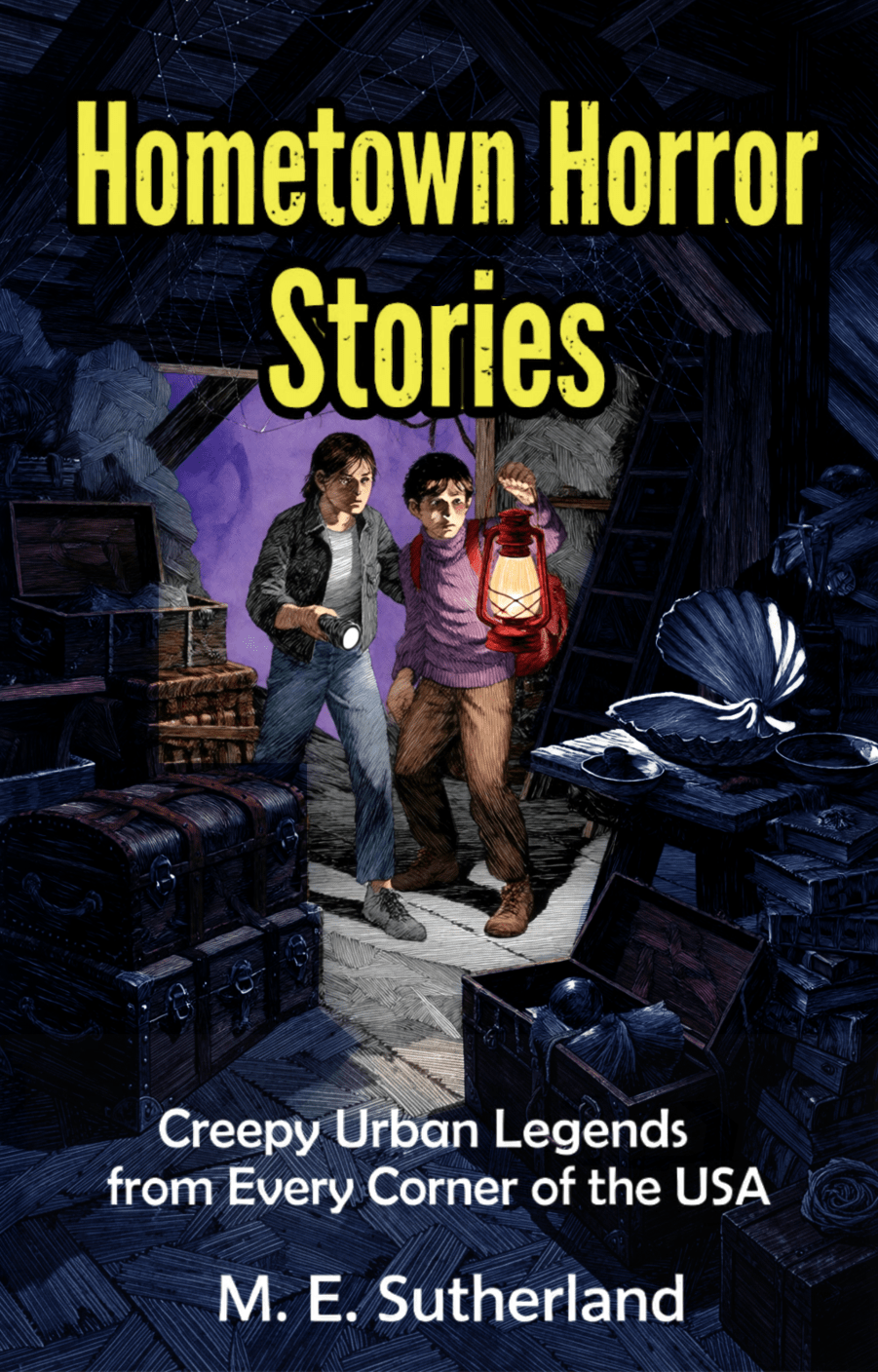
Use fifty legends from fifty states to explore how place shapes storytelling, how claims differ from evidence, and how writers create suspense. The five thematic units below can support a full-book study or a shorter, selective sequence.
How to Use This Educator Corner
Choose one unit, combine several, or use the sequence as a full-book framework. Before assigning any reading, review the selected stories for intensity, themes, and the needs of your particular group. Offer a comparable non-horror option when helpful.
Flexible by design
This guide suggests adaptable reading, research, discussion, and writing work. It does not prescribe a grade level or guarantee that every selection will suit every reader. Local requirements and learning goals should guide pacing, assessment, and text selection.
Investigate what a story says and what a source supports
Unit 1: Folklore, Claims, and Evidence
Goal: Distinguish documented facts, reported beliefs, unresolved claims, and invented details.
- Select two stories and list their checkable claims.
- Trace each claim to a source and note what that source can establish.
- Rewrite one confident statement using evidence-matched language.
Flexible output: an evidence chart, annotated source list, short presentation, or creator’s note.
Read the landscape as part of the story
Unit 2: Geography and the Power of Place
Goal: Explain how terrain, weather, industry, settlement, and local history contribute to a legend’s mood and meaning.
- Map several story locations and identify a defining feature of each setting.
- Mark which setting details create isolation, danger, mystery, or belonging.
- Move one scene to a different environment and explain what must change.
Flexible output: an annotated map, setting profile, travel-poster analysis, or rewritten scene.
Look for patterns without flattening differences
Unit 3: Comparing Stories Across Regions
Goal: Compare recurring figures, warnings, locations, and narrative patterns across several states.
- Group selected stories by motif, setting, or source of danger.
- Compare how two regions reshape a similar pattern.
- Discuss which similarities are supported by the text and which are interpretations.
Flexible output: a comparison matrix, regional exhibit, seminar, or analytical paragraph.
Make changes visible and intentional
Unit 4: Adaptation, Perspective, and Responsible Retelling
Goal: Analyze how point of view and adaptation change a story while respecting people, communities, and living traditions.
- Identify what a retelling keeps, changes, combines, or invents.
- Rewrite a short event from another participant’s point of view.
- Add an author’s note separating research, interpretation, and invention.
Flexible output: a paired retelling, audio script, comic, interview, or adaptation statement.
Study the craft, then create
Unit 5: Suspense Craft and Original Writing
Goal: Use pacing, sensory detail, withheld information, repetition, and setting to build suspense.
- Annotate where a selected story slows down, speeds up, or withholds an answer.
- Imitate one craft move in a low-stakes paragraph.
- Draft an original hometown mystery or suspense scene and revise for effect.
Flexible output: a polished scene, live reading, podcast episode, storyboard, or craft commentary.
Fifty states, fifty starting points
The Complete Story Reference
Use this index to plan regional comparisons, setting studies, small-group choices, or a journey through the complete collection.
Alabama: The Whispering Playground
Alaska: The Kushtaka of Nakwaktuk
Arizona: The Lost Dutchman's Mine
Arkansas: The Gurdon Light
California: The Dark Watchers of San Lorenzo
Colorado: The Tommyknockers of Central City
Connecticut: The Dudleytown Woods
Delaware: The Light of Lewes Beach
Florida: The Hotel Cassadaga
Georgia: The Church Below Harborside
Hawaii: The Night Marchers of Kalaupapa
Idaho: The Water Babies of American Falls
Illinois: The Horror in Enfield
Indiana: The Green Clawed Beast of Riverton
Iowa: The Whispering Cornfield of Vinton
Kansas: The Hamburger Man of Effingham
Kentucky: The Pope Lick Monster of Anchorage
Louisiana: The Grunch of Barataria
Maine: The Light of Phippsburg
Maryland: The Goatman of Greenwood
Massachusetts: The Dover Demon of Dover
Michigan: The Dogman of Pine Creek
Minnesota: The Wendigo of Ely
Mississippi: The Witch of Satartia
Missouri: The Zombie Road of Gray Summit
Montana: The Flathead Monster of Polson
Nebraska: The Weeping Woman of Brownville
Nevada: The Red-Haired Giants of Lovelock
New Hampshire: The Wood Devil of Carroll
New Jersey: The Jersey Devil of Leeds Point
New Mexico: La Llorona of San Ysidro
New York: The Lady in White of Churchville
North Carolina: The Beast of Bladenboro
North Dakota: The Thunderbird of Medora
Ohio: The Whispering Woods of Kingston
Oklahoma: The Shaman's Portal of Beaver
Oregon: The Bandage Man of Cannon Beach
Pennsylvania: The Seven Gates of Laceyville
Rhode Island: Mercy Brown of Hope Valley
South Carolina: The Lizard Man of Bishopville
South Dakota: Walking Sam of Pine Ridge
Tennessee: The Bell Witch of Adams
Texas: The Candy Lady of Elmswood
Utah: The Ghost of the Great Salt Lake of Corinne
Vermont: The Frozen People of Frostville
Virginia: The Bunnyman of Clifton
Washington: Mel's Hole of Kittitas
West Virginia: The Flatwoods Monster of Flatwoods
Wisconsin: The Hodag of Starks
Wyoming: The Devil's Tower Whispers of Hulett
Keep Exploring
Need guidance that works with any scary story? Visit Resources for Educators and Parents. To learn more about the complete fifty-state collection, return to the Hometown Horror Stories home page.