Supporting young readers
Resources for Educators and Parents
Scary stories can open conversations about courage, uncertainty, evidence, empathy, and imagination. This evergreen guide helps adults choose material thoughtfully and turn a good scare into useful reading, discussion, research, or writing.
The flagship collection
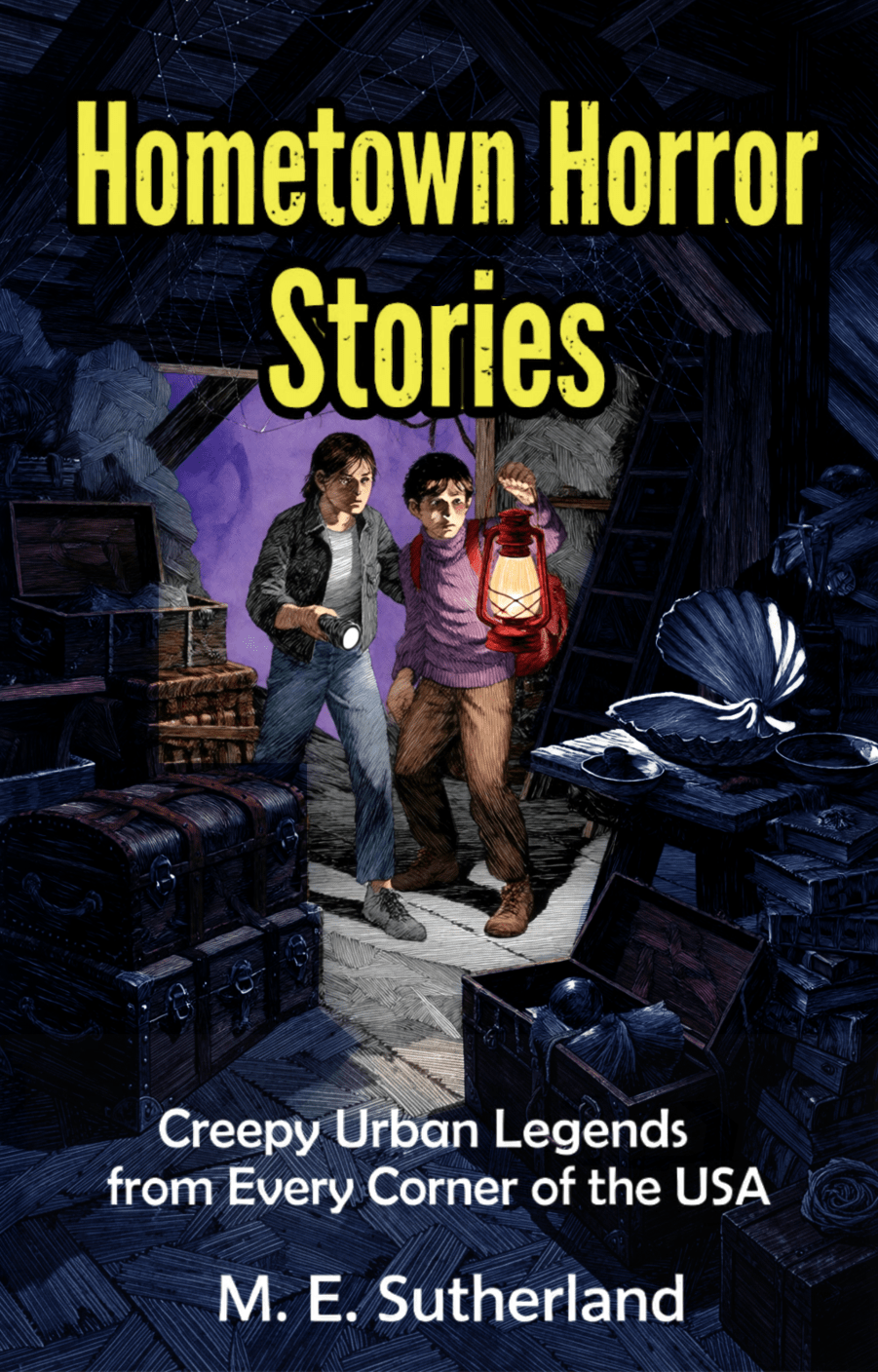
Teach With Fifty States and Fifty Stories
Turn the complete national collection into a flexible study of folklore, geography, evidence, responsible adaptation, and suspense craft. The dedicated Educator Corner includes five thematic units and a reference index for every state.
Choosing Scary Stories
Start with the reader, not a number
This guidance is not a universal age recommendation. Readers respond differently to suspense, grief, darkness, danger, monsters, and unresolved endings. Preview the material, use concrete content notes when they are available, and consider the individual reader’s interests and boundaries.
- Notice intensity, not just subject. A familiar monster can feel mild in a humorous scene and frightening during sustained pursuit.
- Look for specific content. Threats, confinement, copied voices, injury, death, family stress, and real-world tragedy affect readers differently.
- Consider the ending. Resolution, humor, support, and a safe return can change how an otherwise tense story feels.
- Leave room for choice. Reading ahead, pausing, skipping a scene, listening with an adult, or choosing another text are all valid options.
For Parents and Caregivers
Invite a young reader to describe what feels exciting, confusing, or too intense without treating fear as a test of bravery. A short conversation before and after reading can make the experience feel safer and more memorable.
- Ask what kind of scary story the reader enjoys and what they prefer to avoid.
- Agree on an easy way to pause or stop without embarrassment.
- Talk about which details were invented, which might come from tradition, and which would need evidence.
- After reading, ask which character choice changed the situation and what the reader might have done.
For Educators and Librarians
Preview the complete selection and plan participation choices before using frightening material with a group. Keep research claims separate from imaginative writing, avoid asking anyone to disclose personal fears or experiences, and provide a non-horror alternative that practices the same skill.
- Reading: identify setting, point of view, pacing, sensory detail, and withheld information.
- Research: trace a statement to a source and describe what the source can and cannot establish.
- Discussion: compare interpretations without requiring a single emotional response.
- Creation: adapt the activity as a mystery, suspense scene, comic script, oral retelling, or evidence poster.
Discussion Questions for Any Story
- What does the main character know at the beginning, and what information is hidden?
- Which detail first changes an ordinary setting into an unsettling one?
- How do sentence length, repetition, sound, darkness, distance, or silence affect the pace?
- Which choice helps the character, and which choice increases the danger?
- What is explained by the ending, and what remains uncertain?
- How would the story change from another character’s point of view?
- Which parts could be checked with evidence, and which exist only inside the fiction?
Folklore, History, and Fiction
A traditional story can matter to a community without proving that a supernatural event occurred. Help readers use language that matches the available evidence:
- Documented
- An identifiable source supports the event, date, person, place, or statement.
- Reported
- A source shows that someone described, repeated, or believed a claim.
- Unresolved
- The available evidence is incomplete, conflicting, or unable to answer the question.
- Adapted or invented
- A writer changed or created a detail for narrative effect.
Try rewriting an overconfident claim using phrases such as “records show,” “a witness reported,” “later versions say,” “the evidence does not establish,” or “the writer invents.”
Flexible Writing Activities
- One detail is wrong: describe a familiar place where one ordinary object behaves unexpectedly.
- Two explanations: write the same event once as a supernatural encounter and once with a realistic explanation.
- Responsible adaptation: research a tradition, then label what the new story keeps, changes, and invents.
- Change the form: turn a suspense scene into a comic page, audio script, diary entry, or news report.
For research-based work, add a short creator’s note naming the source and separating research from invention.
When a Reader Wants to Stop
Stopping is useful information, not a failure. Pause, summarize instead of showing a difficult scene, switch formats, read together, or choose a different text. For group use, offer an alternative that reaches the same learning goal without requiring frightening content.
Privacy and Adult Guidance
Keep online use adult-managed. Please do not ask children to submit personal information, names, ages, locations, school details, or private stories through this site. Adults can review the site’s privacy page before using any signup or contact feature.