Beaver County folklore
The Pig Lady of Cannelton
Near the former Cannel coal mines, generations have told of a woman’s ghost. The earliest remembered form was headless; later versions gave her a pig’s head. That change is not a flaw in the story—it is evidence of folklore evolving in the telling.
What the marker means
The Legends & Lore marker recognizes a community tradition. A folklore marker is evidence that a story is culturally important; the marker is not proof that a murder occurred exactly as told or that a ghost exists.
What the legend says
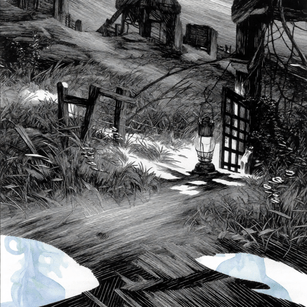
The Cannelton story is attached to the landscape around old coal workings in Little Beaver Township. A female apparition appears near the mines or roads. In older recollections she is headless. In the version that supplied the lasting name, she has the head or face of a pig. The figure is frequently identified as Barbara Davidson, described on the marker as a supposed murder victim and early resident.
The legend can function as a ghost story, a dare, and a warning. Former mine land contains real dangers—unstable ground, shafts, water, and ruins—so a frightening figure that keeps children away can have a practical social use regardless of belief.
Earliest credible accounts
The accessible evidence establishes a local oral tradition remembered across generations, not a contemporary murder record that verifies every detail. The William G. Pomeroy Foundation’s marker summary says early versions described a headless ghost and later versions perceived the figure with a pig’s head. That sequence is the strongest responsible claim available from the reviewed sources.
The story received formal folklore recognition through Pennsylvania’s Legends & Lore program, with the Pennsylvania Center for Folklore serving as a statewide partner and evaluator. The marker was erected in 2024. The recognition records a living tradition rather than supplying a date for its first telling.
Documented historical context
Cannelton’s identity was shaped by coal extraction and the communities around it. Dangerous industrial spaces often attract warning tales, especially after operations close and physical hazards remain. The Pomeroy Foundation notes that the Pig Lady story may have helped discourage children from exploring the old mine area.
Local historical work continues to collect and interpret the story. The Little Beaver Historical Society describes Michael Kishbucher’s research into Barbara Davidson and other regional tales as an investigation of potential origins. That language matters: investigation can show how a story relates to place and memory without proving its supernatural claims.
Conflicting versions
The central conflict is visible in the apparition itself. Is she headless, pig-headed, or pig-faced? Is she a specific murdered woman, an anonymous warning figure, or a composite built from more than one tale? The legend has changed over time, and a later memorable image may have displaced an earlier one.
Modern summaries sometimes provide precise murder dates, methods, and family details. Without a cited contemporary record, those particulars should remain claims within the legend. Even the marker’s careful wording calls Barbara Davidson a “supposed murder victim.”
What remains unverified
The reviewed evidence does not establish the circumstances of Barbara Davidson’s supposed death or confirm that an apparition has appeared near the mines. It does not explain exactly when the pig-headed version emerged. The historical setting, multigenerational tradition, marker, and community interest are documented; the ghost is not.
How the fiction adapts the material
Chapter 9, “Don’t Look in the Mirror,” uses Cannelton and the Pig Lady’s changing appearance to create a new story. It invents a nine-year-old protagonist, a lure, a mirror encounter, a culvert collapse, and the resolution. Those events are fiction, not additions to the historical record.
Sources
- William G. Pomeroy Foundation, “The Pig Lady”, marker text and program summary of the evolving legend.
- Pennsylvania Center for Folklore, research programs, describing its Legends & Lore evaluation role.
- Little Beaver Historical Society, Legends & Lore of Little Beaver Creek, local research into potential origins.
- Historical Marker Database transcription, marker wording, location, and date.