Pennsylvania folklore companion
The Green Man and Charlie No-Face
Beaver County and Route 351, Pennsylvania
Behind one of western Pennsylvania’s best-known roadside stories was Raymond Robinson, a real person whose nighttime walks became entangled with rumors, dares, and supernatural embellishment.
Evidence labels used here
Documented history describes supported facts about Robinson. Reported folklore describes stories people told. Repetition establishes that a legend circulated; it does not turn its supernatural details into fact.
What the legend says
Generations of western Pennsylvania teenagers heard that a strange figure walked dark roads after midnight. Some called him Charlie No-Face; others called him the Green Man and claimed that his skin glowed green. A typical version turned a drive along an isolated road into a dare: find the figure, flash headlights, or stop and speak to him.
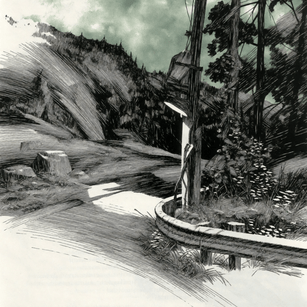
The core of the story was not an apparition. Raymond Robinson took long walks at night along Route 351 between Koppel and New Galilee. His severe facial injuries made daylight attention difficult, while the quieter road gave him space to walk. People sought him out, and many accounts remember a reserved but friendly man willing to talk or pose for a photograph.
Earliest credible accounts
The earliest records located for this review are two 1919 Beaver Falls newspaper reports identified in the cited Appalachian Historian source: the Beaver Falls Evening Tribune report “Morado Lad, 8, Shocked By Live Wire, Will Die” from June, and the Daily Times follow-up “Doctors Marvel That Boy Lives” dated August 4. They document the accident and Robinson’s survival—not a ghost story. The original scans should still be checked before relying on finer details such as the precise accident date.
Later regional reporting and local-history collections document his nighttime walks and the attention they attracted. Those records support the person, place, and broad pattern behind the legend. They do not support a glowing body, supernatural powers, or a haunting. The nickname’s precise origin is harder to establish; treating one later explanation as proven would overstate the evidence.
Documented historical context
Raymond T. Robinson was born in Beaver County in 1910. As a boy, he was catastrophically injured by an electrical line near a bridge. He survived, but the injuries altered his face and one arm. He later became known for walking at night on the rural road near his home. Robinson died in 1985.
That history matters because a legend can hide a person in plain sight. The scary-story version often reduces Robinson to a silhouette at the roadside. Local memories also describe conversation, cigarettes, photographs, and ordinary encounters. A responsible retelling keeps his humanity at the center and recognizes that curiosity sometimes crossed into harassment.
Conflicting versions
Some tellings place the Green Man in a tunnel south of Pittsburgh; others put him on Route 351 in Beaver County. The tunnel version appears to be a later migration of the legend and should not be used as evidence about Robinson’s actual walking route. Stories also disagree about why he was green: electrical injury, reflected light, clothing, or an otherworldly glow. None is established as medical fact.
Even the encounter changes by teller. In one version he is dangerous; in another he is a shy ghost; in remembered personal encounters he is simply Robinson. These contradictions show folklore at work: details shift to fit a local road, a nighttime dare, or the storyteller’s desired ending.
What remains unverified
No credible source establishes that Robinson glowed, vanished, attacked travelers, haunted a tunnel, or returned after death. Available accounts do not settle exactly when each nickname began or who coined it. Photographs and recollections can document encounters, but they cannot prove the supernatural details added later.
How the fiction adapts the material
Chapter 2 of Hometown Horror Stories: Pennsylvania, “Someone Is Walking Old Route 351,” is fiction inspired by the roadside legend. Its young characters, plot, threats, and supernatural events are invented. The story is not a biography of Raymond Robinson, and its frightening elements should not be read as claims about him.
Sources
- Lawrence County Memoirs: Raymond Robinson, a regional history summary with photographs and biographical details.
- Appalachian Historian: Raymond Robinson Behind the Legend, a cited synthesis that names the two 1919 Beaver Falls reports and later regional sources; the article itself cautions that the original scans should be checked.
- USC Digital Folklore Archives: Charlie No-Face, an example of the legend as collected folklore rather than verified biography.